
Center for Teaching and Learning


About
Within the framework of Erasmus+ MAGNET project, the University of Arts is Belgrade established Center for Teaching and Learning (CTL) in January 2024.
Having in mind the importance of the continuous development of university pedagogy, enhancing teachers’ competencies, and, consequently, the improvement of teaching quality, CTL’s primary mission is to provide educational support service with the aim to foster excellence in teaching and learning through innovative pedagogy practices.
Encouraging research and knowledge on teaching and learning, CTL is strongly oriented towards:
– support and promotion of innovative teaching processes in the field of art
– improvement of teaching methods
– student support in development of knowledge and skills that are significant for their further education, employment, self-employment, and professional
To fulfill its mission, CTL is committed to:
– organise workshops, seminars and training sessions for teachers to improve their teaching skills, learn new pedagogical techniques and methods, and stay updated with the latest educational research
– organise workshops, seminars, and trainings for students to improve their skills and knowledge about employment, self-employment, professional networking, etc.
– provide tools, techniques and literature both for teachers and students
Head of CTL: Prof. Vesna Popović, vice-rector of UAB
Three lectures for university pedagogists are available on YouTube channel
TEACHERS’ DIDACTIC COMPETENCES IN HIGHER EDUCATION
Lecturer: Luka Nikolić, Center for Teacher Education, Faculty of Philosophy, University of Belgrade

Abstract:
Starting from the premise that education is a broader concept than merely acquiring knowledge, this lecture is centred on competences, viewed as an integrated term encompassing knowledge, abilities, skills, values, and attitudes, as well as the readiness to act. The focus is then narrowed to the competences of higher education teachers, primarily the didactic competences required to fulfil the role of a higher education teacher.
Furthermore, a new didactic approach called interactive teaching was introduced, emphasising the importance of considering not only content when planning, conducting, and evaluating teaching, but also the process itself and the relationships within the classroom. The lecture highlights the importance of addressing not only cognitive aims and goals, but also emotional and social ones, basing teaching on cooperative learning and group work, and making the teaching process more dynamic, non-linear, and flexible.
Lecture is available HERE.
INTRODUCING DISABILITY MODELS TO PROMOTE GREATER INCLUSIVITY IN SPECIALIST ARTISTIC EDUCATION
Lecturer: Dejana Mutavdžin, PhD, Assistant Professor of Psychology at the Faculty of Music, University of Arts in Belgrade

Abstract:
Why is inclusive education important?
What is the relationship between inclusive education and the education of gifted students?
How do teachers’ attitudes toward persons with disabilities shape their behavior towards their students with needs for additional support?
How teachers’ behaviors might influence the relationships among their students?
If you have asked yourself any of these questions, you may find some of the answers in this half-hour lecture titled “Introducing disability models to promote greater inclusivity in specialist artistic education.” Although its core is the overview of disability models, as presented in the same name chapter by Erin Andrews (2017), familiarizing educators of future artists with these models is not its sole purpose. The main aim of this talk is to foster greater inclusivity and reflexivity among colleagues in relation to their own teaching practice (Alves, 2019). Valuable support on this important journey can be found in the works of authors whose voices strongly resonate throughout this lecture’s content — not only in the work of Andrews and Alves, but also of local scholars such as Olja Jovanović, Vera Rajović, Nevena Strižak, Luka Mijatović, Sanja Dimoski, Ana Altaras Dimitrijević, and Sanja Tatić Janevski, among others.
Lecture is available HERE.
ART EDUCATION WITHIN SELF-REGULATED LEARNING FRAMEWORK
Lecturer: Dejana Mutavdžin, PhD, Assistant Professor of Psychology at the Faculty of Music, University of Arts in Belgrade

Abstract:
Building on the widely recognized purpose of education, as well as on competencies frequently identified in the literature as essential for active participation in contemporary societies, this lecture introduces self-regulated learning (SRL) as a promising response to these demands. By relying on insights and research findings from both general and music education, and by mapping some challenges, the relevance of this topic was highlighted.
At the core of the talk lies Zimmerman’s cyclical phases model of self-regulated learning (Zimmerman & Moylan, 2009; especially the review by Panadero & Alonso-Tapia, 2014; see also Panadero, 2017). While outlining the model, attention is given to examples of teacher interventions, most of which proposed in the paper of Panadero and Alonso-Tapia (2014).
The lecture concludes with an overview of possible direct instructions and tools that teachers can employ to foster SRL in students. This last section draws heavily on the paper of Utermohl de Queiroz et al. (2025), especially on interventions and tools described in the studies presented there.
Lecture is available HERE.
Online lecture “Developing pedagogical competences in artistic fields of university education − experiences in music pedagogy”
Online lecture for teachers and researches entitled “Developing pedagogical competences in artistic fields of university education − experiences in music pedagogy” was held on June 25, 2024.
The topic of this lecture is presentation of the basic platform on which music pedagogy functions within the Department of Solfeggio and Music Pedagogy оf the Faculty of Music in Belgrade.
In accordance with the needs of articulating the content to the context and target group, we also highlighted general, universal places which are like a key or formula, applicable for organizing and articulating the acquisition of pedagogical competencies even when they are not explicitly musical.
***
The ancestors of music pedagogy originate from two sources – general pedagogical science and music science. Starting from pedagogy, through didactics to methodology, we arrive at the methodology of teaching musical literacy.
In decades of searching for answers to questions who, how much, when, why and how, and then what and with what, we will show how it was possible to transparently present the elementary starting points on which the didactic-methodical apparatus of music teaching functions. Considering its high functionality and adaptability, this presentation of the methodical organization of the educational process contains the potential of universality − it is also applicable to other artistic and scientific fields in order to organize the educational process that leads to the development of pedagogical competences.
Presenting the methodology of teaching solfege/music literacy, as a key scientific discipline in the building of music pedagogues, we point to its integrative character and the enormous potential of interdisciplinarity, multidisciplinarity, and transdisciplinarity. Thanks to the universality of methodical organization of teaching, we return to the center of the educational process, where individual stands with all his competences and potential for development and cooperation, in constant search for the optimal how.
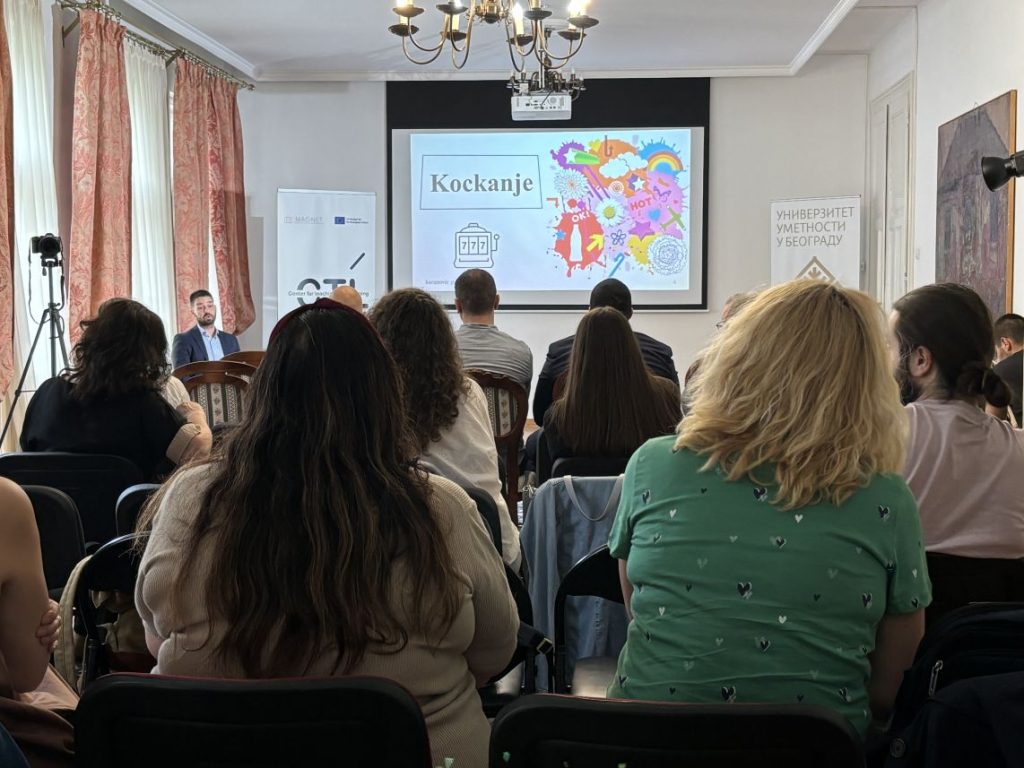
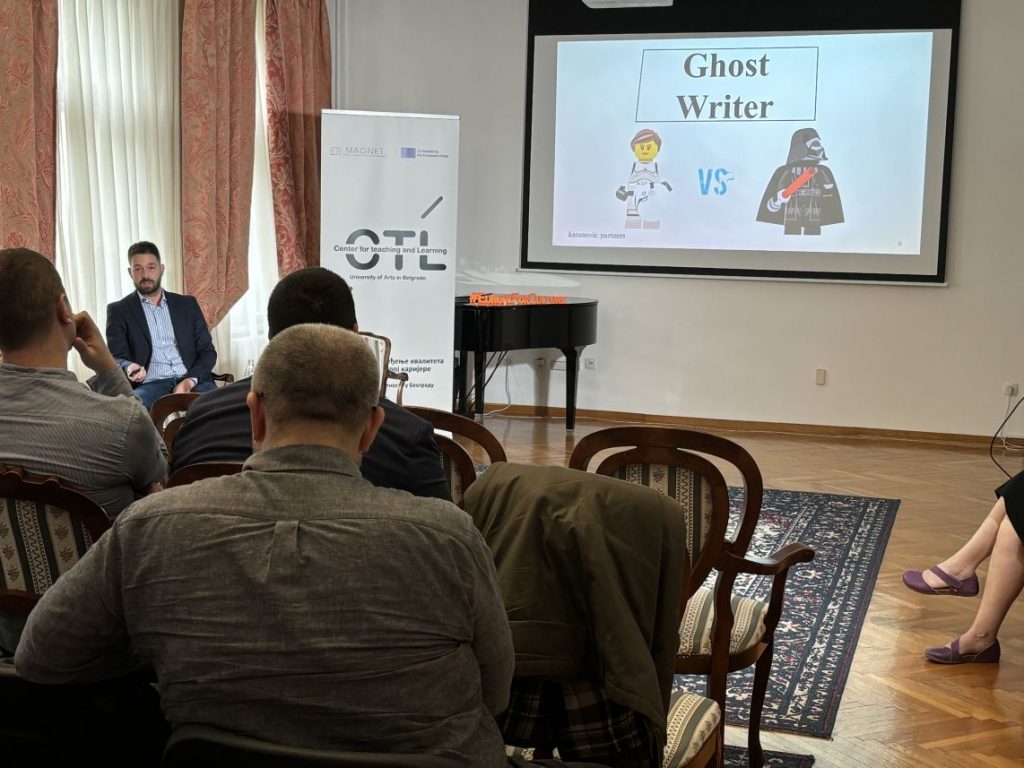
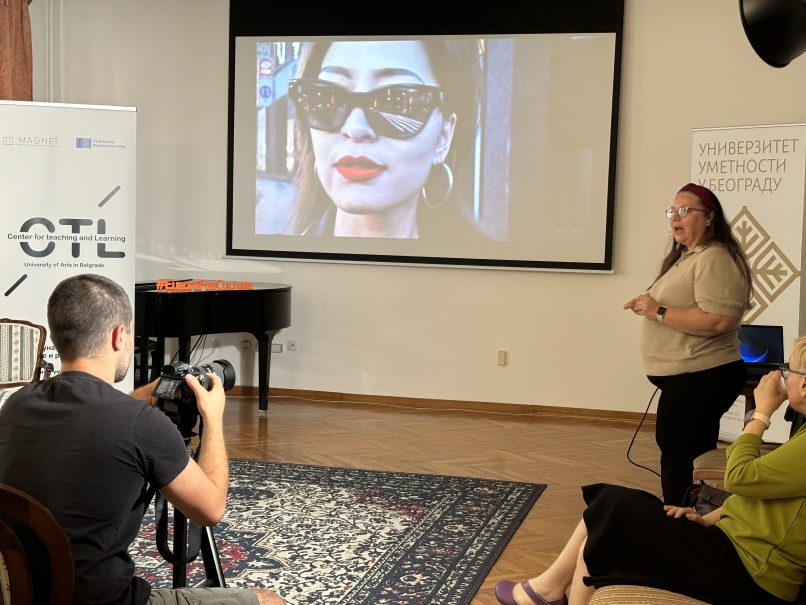
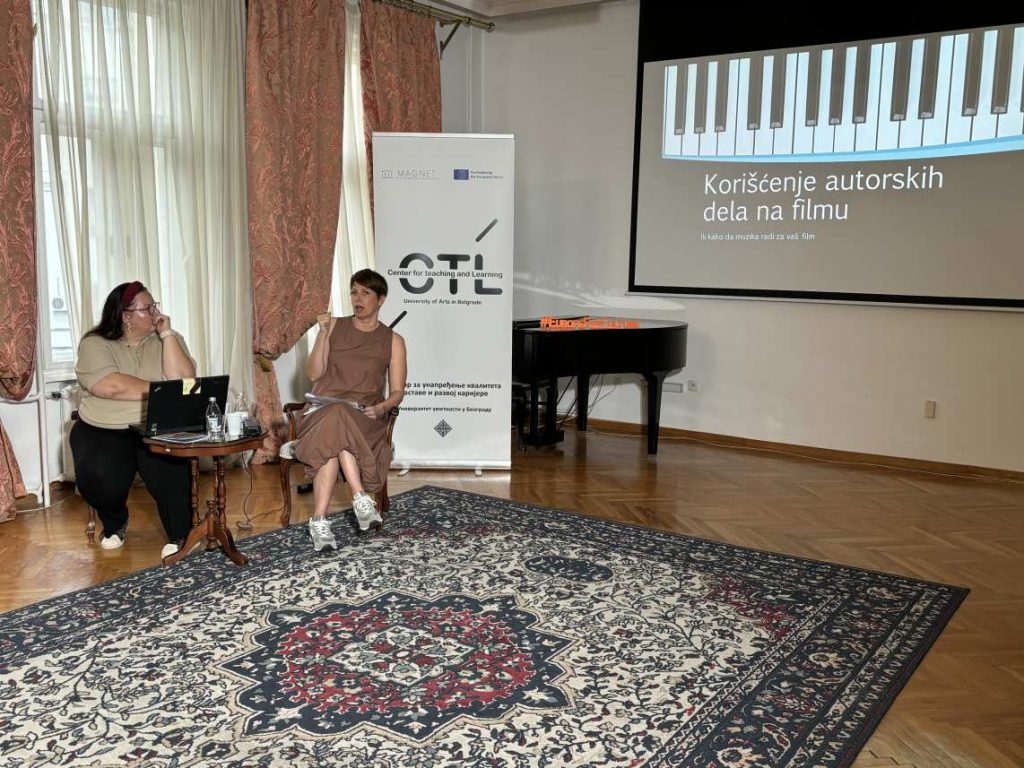
“MEDIA Learning Lab #6: protection of creative work” was held within CTL
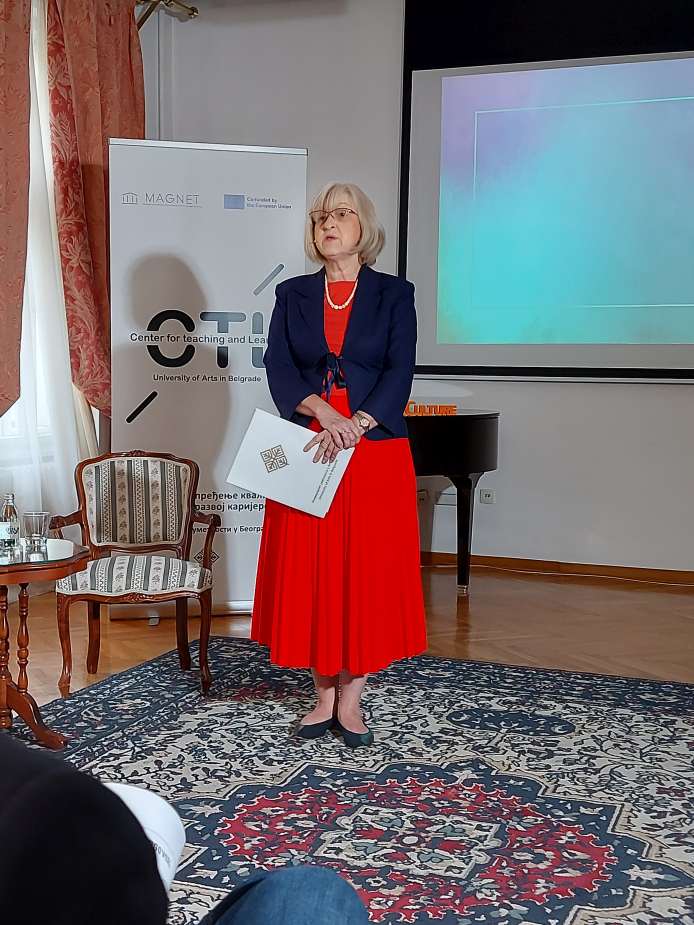
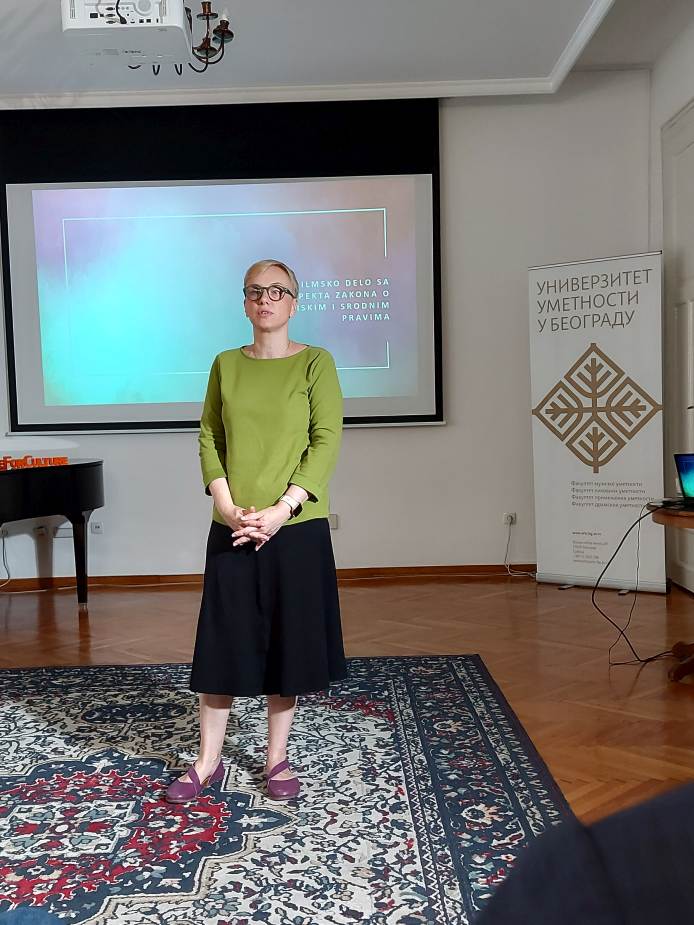
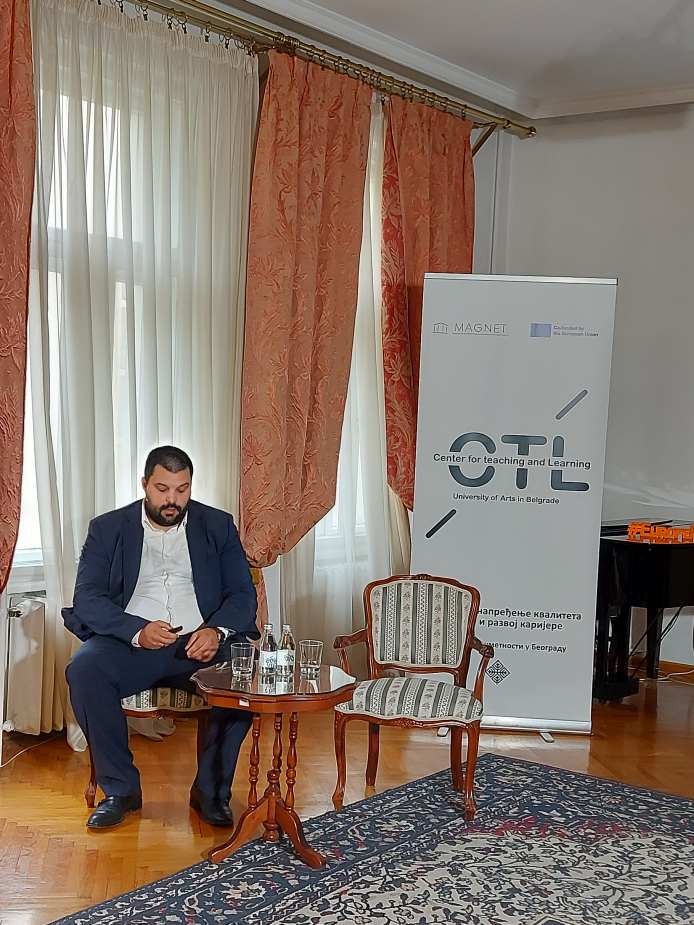
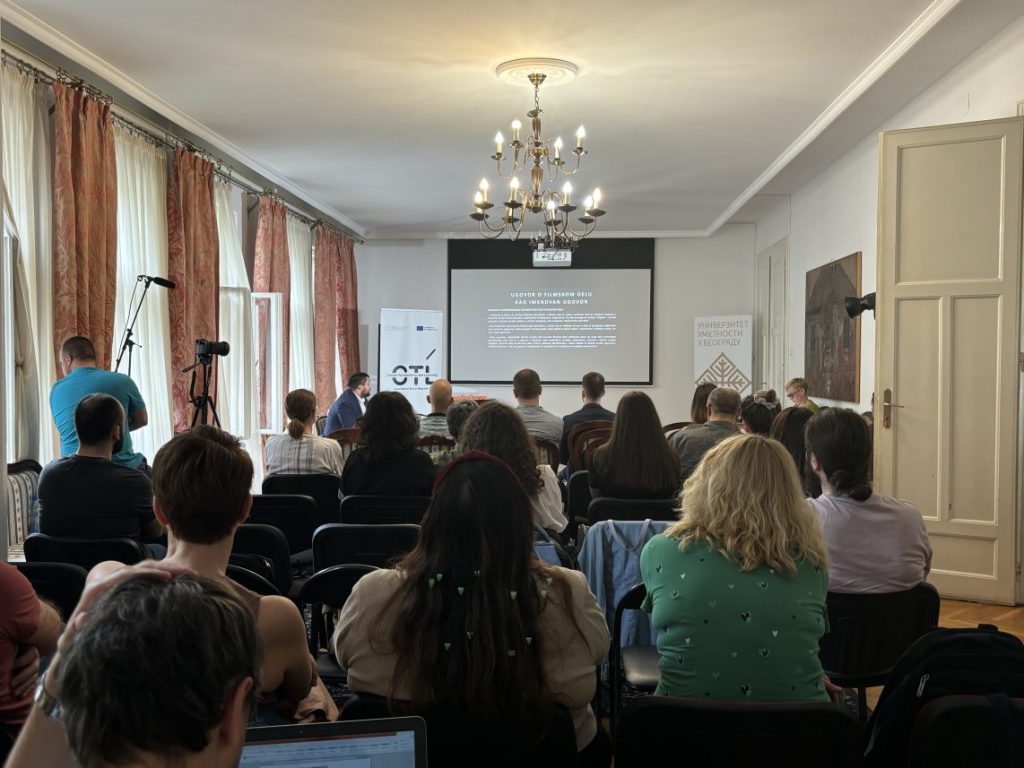
A one-day event “MEDIA Learning Lab #6: protection of creative work” was held at the University of Arts in Belgrade, on June 3, 2024, within the newly established Center for Teaching and Learning (CTL).
The event, which was organized in cooperation with the University of Arts in Belgrade and MEDIA Desk Serbia of the Film Center of Serbia, consisted of a series of lectures on copyright protection in the field of film, music, creative industries, artificial intelligence, etc.
Lecturers were lawyers – experts for the protection of creative work: Aleksandar Popović, from law office JPM&PARTNERS, Nikola Kliska from law office Karanović&Partners, Tatjana Bukvić from Tin Drum Music company, and Emina Peruničić from MASCOM company.
The event was organized in the framework of Erasmus+ project MAGNET – Managerial and GoverNance Enchancement through Teaching, co-financed by EU.
MOOC
In the framework of Erasmus+ project MAGNET, the University of Arts in Belgrade developed its first Massive Open Online Course – MOOC. Dr. Marija Karan, assistant professor of the Faculty of Music, created and implemented the MOOC entitled Strengthening of critical thinking and criteria by boosting the skills of decoding mass media messages among pedagogues. The course is intended for pedagogues and research students who want to improve their skills in decoding mass media messages, develop mass media and digital literacy, learn about the postulates and effects of mass media and audience theory as key factors in the formation of critical thinking and criteria for pedagogues. The course consists of videos, presentations and questions, and encompasses four thematic units: 1) Introduction and overview of the course, 2) Radio, 3) Television and 4) Internet.
The MOOC is available on MAGNET-MOOCs plaform:
https://magnet-moocs.mbg.duth.gr/courses/course-v1:uab+DCT101+2024_T1/about
Library