MY STUDENT TRAINEESHIP IN BERLIN: Lena Baljak
Lena Baljak
University of Arts in Belgrade, Faculty of Dramatic Arts
Erasmus+ Mobility for Traineeship at:
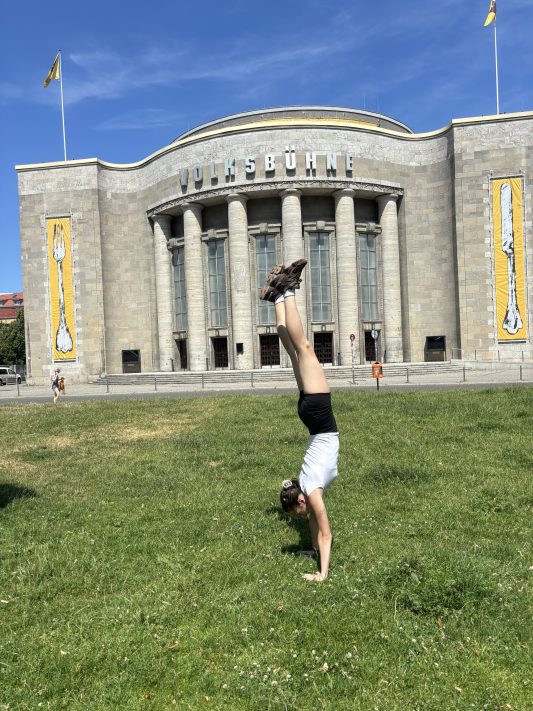
Volksbühne am Rosa-Luxemburg-Platz, Berlin
My traineeship at Volksbühne took place during a period of institutional transition, as the theatre was preparing a new artistic direction while simultaneously planning the upcoming season and maintaining an active network of international collaborations. This allowed me to experience not only the visible outcomes of theatre production but also the everyday organizational, curatorial, and production processes that sustain a major cultural institution.
Volksbühne occupies a distinctive place within the European performing arts landscape. Its history of political engagement and experimental artistic practice continues to shape the institution today, creating an environment in which artistic risk, openness, and critical thinking are embedded in everyday work. Being part of this context deepened my understanding of how a theatre can preserve a strong identity while continuously redefining itself through new collaborations, formats, and public engagement.
Working within the Touring & Music Programme and the Artistic Directorate gave me insight into international cooperation, production planning, festival relations, and communication strategies. More importantly, it revealed that successful touring and cultural exchange rely on long-term relationships, careful planning, and continuous dialogue long before a performance reaches its audience.
Equally important was experiencing Berlin itself. Living in a city where performing arts are deeply woven into everyday life exposed me to an exceptionally diverse cultural landscape, extending far beyond the theatre where I worked. The openness of the city, its social life, and the accessibility of artistic events created a constant source of inspiration, while the welcoming atmosphere within the institution made it easy to feel accepted as part of the collective. Together, the city and the theatre demonstrated how cultural institutions can function not only as places of artistic production but also as spaces that actively shape communities and public life.
Looking back, the traineeship strengthened my interest in working in theatre and cultural production while broadening it toward programming and institutional development. More than anything, it confirmed the value of learning within an environment where artistic ambition, international collaboration, and social relevance exist as inseparable parts of everyday practice.